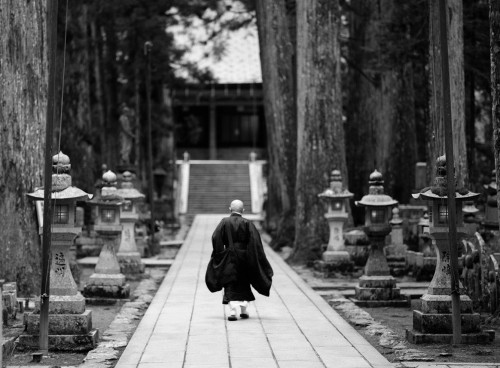
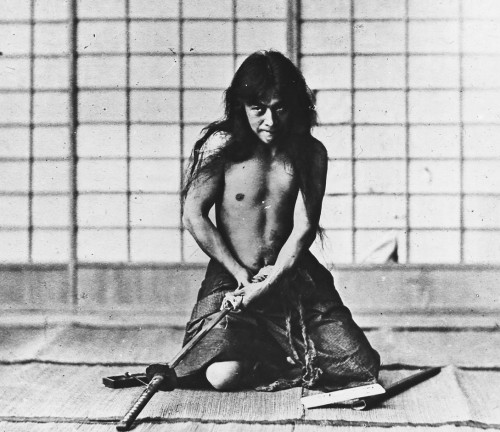
In Part 2 of his serialised monograph, “Death in the Japanese Tradition”, Professor Stuart D. B. Picken looks at Japanese attitudes to death through the ages, from primal awakenings to Prehistoric perceptions.
The first instalment of Professor Stuart Picken’s serialised monograph “Death in the Japanese Tradition: A Study in Cultural Evolution and Transformation”, explains where his study of the subject began, and outlines where he will go with it.
After participating in a New York community garden for over a decade, George Martin explains how the revival of urban agriculture can benefit more than just the sustainability of food production.
Alexander Krieg outlines the misconceptions surrounding hikikomori, and the ways in which social withdrawal may be best explained by existing psychiatric disorders.
Dr. Maree Sugai puts forward the argument that the ‘opting out’ of society manifested in Japan is culture reactive and is a social epidemic that is growing.
Professor Ruth Johnson Carter looks at the ways in which the murder trial of Emma Cunningham exemplified how race, wealth and geographical location effect the fairness of death row trials.
Dr. George D. Chryssides looks at the nature of power in religious communities, with particular reference to new religious movements, or “cults”, and how this power is used by leaders.
America has long been taken up with the issue of cultural identity, and its literary authorship has been no less engaged. Who gets to say what writing best speaks for the culture? A. Robert Lee examines the formation of the American literary canon.
Professor Myles Chilton reflects in what is at stake in transgressing disciplinary limits in English language teaching. What are the limits? Who sets these limits? What is the value of incorporating English literature study into the study of English language?
Brian Birdsell uncovers some of the complexity and uncertainty surrounding creativity – a construct which is far from straightforward within the field of psychology.
Professor Bill Ashcroft uses two very different examples of Indigenous art to look at how art and literature can have the capacity to speak to power by speaking beyond it in the context of twentieth-century conflict.
Professor J.A.A Stockwin looks at Japan’s development under the Abe Government, including the political system, the ‘Peace Constitution’, human rights and foreign policy.
You must be logged in to post a comment.