David McCormack gives a short history of General Douglas MacArthur’s administration of Japan and his six decades on the throne as a ‘man of the people’.
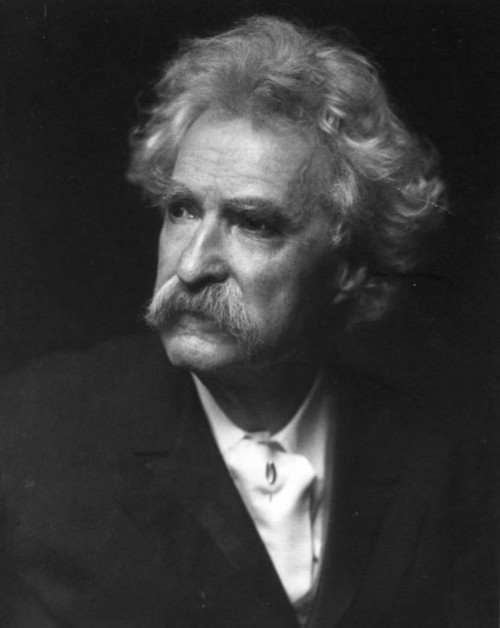
Arthur Shattuck O’Keefe examines how the theme of the individual versus authority in the works of Mark Twain has relevance not only to the world Twain lived in, but to our own, and to human society generally.
Qiang Fu looks at the depiction of consumerism in Jean Rhys’s novels. Does it indicate an evolving capitalist culture or does it challenge us to determine the status of resistance and complicity within capitalist and imperialist regimes?
Dr. Alexandre Avdulov gives a short history of the globalisation of Chanoyu, better known as Japanese tea ceremony, and argues that the practice has provided great potential for intercultural communication.
Michael Liam Kedzlie argues that International Humanitarian Law and its application (or not, as the case may sometimes be) should not just be about terrorism and state-on-state conflict, but about avoiding human created disaster, neglect and brutality.
Professor Svetlana Ter-Minasova examines the traditions and innovations of English Language Teaching (ELT) in Russia, and gives a short history of its development in the country.
Dr. George D. Chryssides looks at the nature of power in religious communities, with particular reference to new religious movements, or “cults”, and how this power is used by leaders.
America has long been taken up with the issue of cultural identity, and its literary authorship has been no less engaged. Who gets to say what writing best speaks for the culture? A. Robert Lee examines the formation of the American literary canon.
Professor Myles Chilton reflects in what is at stake in transgressing disciplinary limits in English language teaching. What are the limits? Who sets these limits? What is the value of incorporating English literature study into the study of English language?
Michael Liam Kedzlie gives an account of USAF operations the morning of the atomic bombing of Hiroshima, Japan.
Professor Dexter Da Silva interviews Professor Frank S. Ravitch on constitutional reform in Japan and the controversy surrounding the Yasukuni Shrine in Tokyo.
Brian Birdsell uncovers some of the complexity and uncertainty surrounding creativity – a construct which is far from straightforward within the field of psychology.
Professor Bill Ashcroft uses two very different examples of Indigenous art to look at how art and literature can have the capacity to speak to power by speaking beyond it in the context of twentieth-century conflict.
Dilton Ribeiro argues that China and Japan’s territorial disputes, such as the Senkaku/Diaoyu Islands, present an opportunity for both countries to focus not on their differences but on their commonalities.
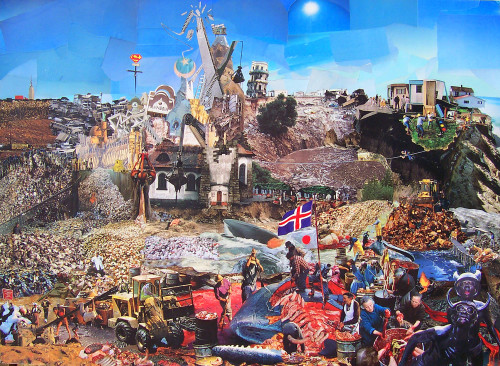
Michael Liam Kedzlie looks at the global controversy caused by Japan’s practice of whaling, and attempts to get to the bottom of why the otherwise favourable Asian nation thinks it’s worth the rap.
Professor Jiro Takai is interviewed by the President of The International Academic Forum (IAFOR), Dr. Joseph Haldane, on the merits of various strategies and methods of conflict management, including that of the avoidance of conflict in Japanese society.
Professor Donald E. Hall and Dr. Joseph Haldane discuss the origins of Queer Studies, The Routledge Queer Studies Reader and interdisciplinary study.
Professor J.A.A Stockwin looks at Japan’s development under the Abe Government, including the political system, the ‘Peace Constitution’, human rights and foreign policy.
Ken Wilson is interviewed on the assumptions that surround language learning. What is essential when learning a new language? Should your teacher be a native speaker of the language?
Cultural studies expert, Professor Baden Offord, speaks to the President of The International Academic Forum (IAFOR), Dr. Joseph Haldane, about why cultural studies is a critical study of everyday life and ‘the new humanities’.
Language learning experts Professor Marjo Mitsutomi and Dr. Minna Kirjavainen present their research on the process of first and second language acquisition, and their findings in the difference in written and spoken self-expression abilities.
Dr. Joseph Haldane, President of The International Academic Forum (IAFOR), interviews Nicholas Benes on Japanese corporate governance, corporate culture and the importance of director training in Japanese business.
Dr. Joseph Haldane speaks to Professor Kuniko Miyanaga, Founding Director of the IAFOR Language Research Institute, about how identity and personality can change when a new language is learnt.
Professor Craig Sower argues that developers’ planned data collection Panopticon is another reason why parents, teachers, and citizens should oppose the Common Core State Standards Initiative (CCSSI).
You must be logged in to post a comment.