
At The Forum in BCE/BAMC2025, delegates discussed how education, the arts, and media can help counter rising extremism and addressing polarisation, putting emphasis on empathy, critical dialogue, and human-centred approaches to creating safe spaces.
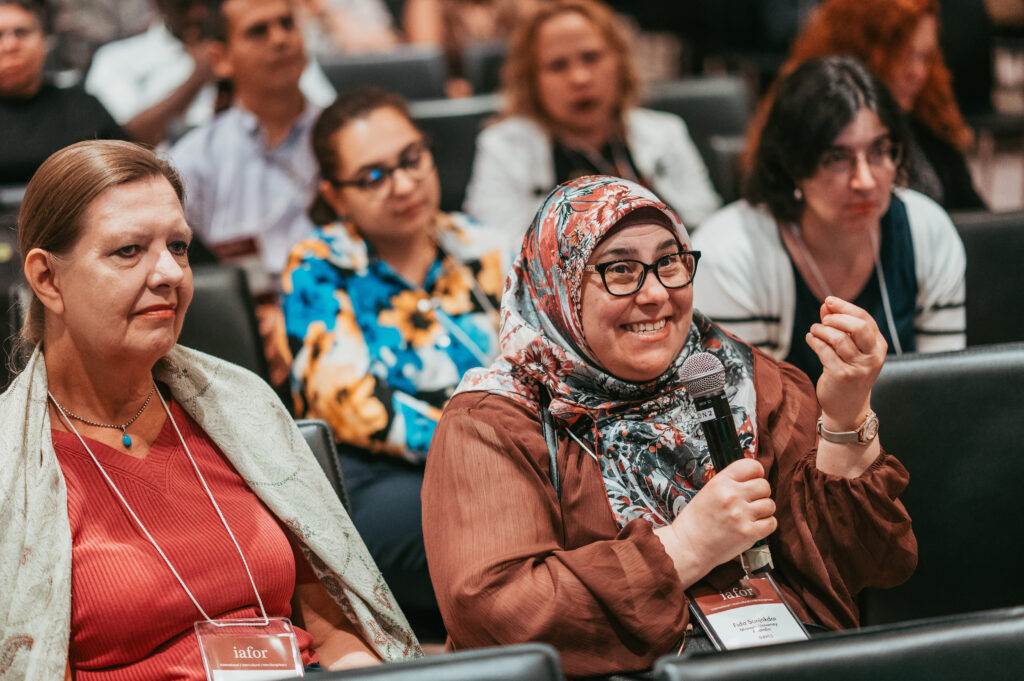
The Forum returned to Barcelona for a second year with a discussion on ‘Education, Arts, Media, and the Rise of Extremism.’ Driven by our IAFOR community, The Forum sessions are one-hour moderated discussions among delegates on pressing issues attuned to the local context but with a wider resonance. The topic for the Forum session in Barcelona was motivated by the need to address how to overcome challenges in an increasingly polarised world, particularly polarisation in domestic politics. Professor Brendan Howe joined Dr Melina Neophytou, IAFOR’s Academic Operations Manager, in leading the session in Barcelona, which reflected on the growing internal divisions and ‘increasingly extreme perspectives’ in nations across the globe.
With the central question of how to ‘disagree well’, participants stressed the importance of empathy and cultural awareness as a foundation for dialogue. In the icebreaker session of The Forum, a participant shared that:
We are all different, and we come from different cultures. Because of that, it is very likely that we think differently because of our different values and beliefs. So, listening to others with empathy and understanding and not judging them is important. We don’t need to show the other that ‘I know better than you’. (A delegate from Lebanon)
When participants were asked what they value most in a debate, the strongest preference was for finding common ground (42%), followed by understanding others (26%), being understood (21%), and winning the argument (11%). This prompted reflection on whether consensus should be the goal of debate. A delegate from Australia questioned this assumption, arguing:
If we are really seeking to find common ground, aren’t we then trying to reach a particular consensus? I think understanding others may trump finding a common ground. Ultimately, the value in a debate is being able to respect the other person’s position, not necessarily agree with it, but understand it, and move on. So, by finding the common ground, we are probably seeking a consensus of some sort, and I have to disagree with that. (A delegate from Australia)
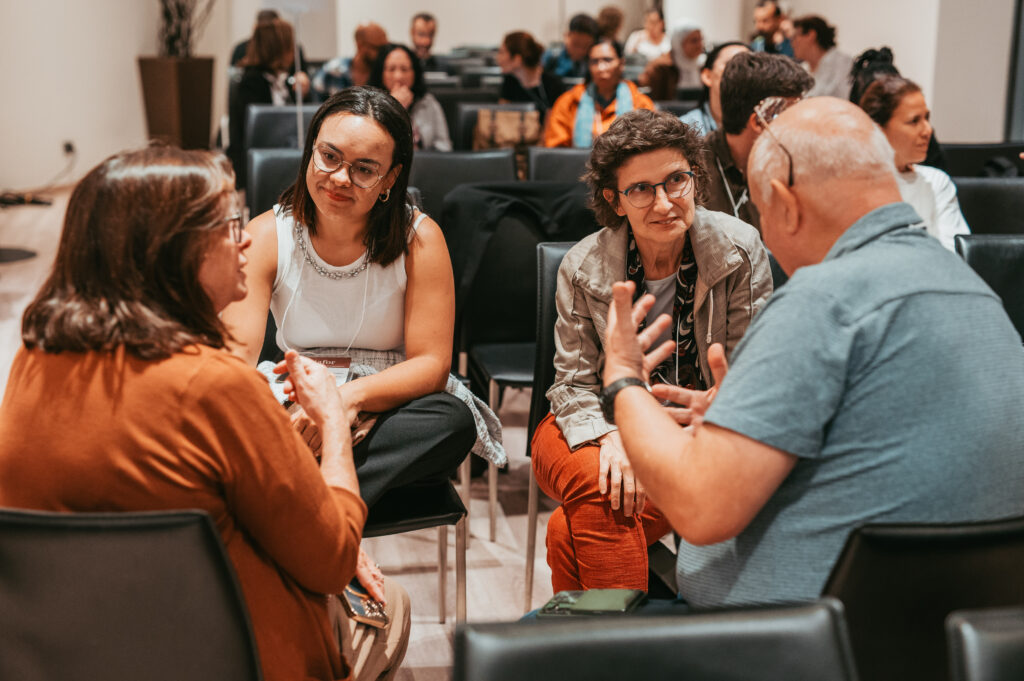
The discussion then turned to how people can disagree well in a deeply polarised environment. Several participants emphasised the role of facts, emotional discipline, and openness to complexity.
How do you disagree well? The most important thing is understanding each other. But in a polarised world, it is more important that the information that is being argued, debated, or presented must be a fact, rather than an interpretation of it that might be mis- or disinformation. (A delegate from the United States)
Building on this, other participants noted the importance of separating ideas from individuals and that there is no single universal truth:
Disagreeing well is being able to differentiate between the ideas and the person, so the emotional and the logical. And what is maybe going on now, the attack on a person, or the weakening of the other, is the opposite of that. (A delegate from Portugal)
There are multiple truths in social science. We can respect that, and we should have multidimensional thinking. For example, right now we have such furious arguments about migration. People have so many varied positions on this, some political, some about poverty, etc. So, we cannot conclude that there is only one truth. (A delegate from Ethiopia working in the United Kingdom)
Participants were also asked to reflect on where they most often experience peaceful dialogue despite disagreement. Most pointed to research (34%) and classroom settings (31%), followed by professional environments (17%), art and cultural projects (11%), and community gatherings (6%), while none identified online spaces. This highlights the immense work and responsibility falling on moderators of online communities, as well as those who manage online platforms, to ensure a convivial space for dialogue in settings where our identities can be hidden and protected from public scrutiny.
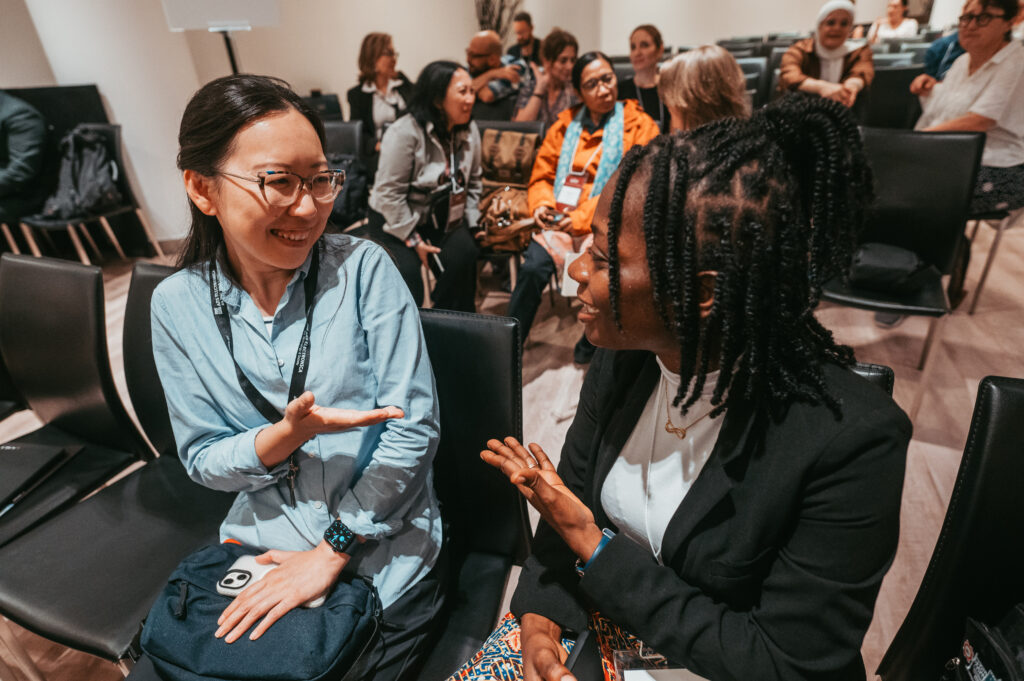
Attention then shifted to the role of educators, artists, and professionals in intentionally creating environments where people feel able to speak freely and safely. Practical examples highlighted the importance of trust and moderation.
As an educator and artist, what I do in my classroom of students, mainly from South and Southeast Asia, is I create a safe space and tell them, ‘whatever you have to say, speak about it here, but whatever happens in the classroom, stays in the classroom’. I once had a student from Pakistan and one from Bangladesh who had a debate, and I told them, ‘Okay, this is your perspective – now, what is the commonality between you two?’ In the end, they became really good friends. It’s about allowing them to speak, knowing that they are safe. When there is a conflict, we as educators need to be the moderators. Students need to trust us. (A delegate from the United Kingdom)
To be an educator, an artist, or a professional means that you are in a position of power, able to influence others. So, empowering people and maybe softening others that you can influence is something we should do. I’m thinking of artists who are very close to policymakers. As educators, artists, or professionals, we need to use our power and influence. (A delegate from Romania)
How to ‘disagree well’ also extends to incredibly difficult conversations around contention, which can often be emotionally charged. One participant from Lebanon questioned whether dialogue is even possible ‘with someone who wants to kill you,’ drawing on their lived experiences related to the Gaza–Israel conflict and arguing that all this debate about ‘disagreeing well’ is useless in the face of fanaticism. In response, another participant reflected on the fragility of so-called safe spaces:
In order for us to create a safe space, we as educators need to feel safe. I think the genocide in Gaza and the situation in Lebanon, as the woman said before, show us that there is no safe space and that we cannot address issues in a safe manner. In the academic world, we also don’t feel safe talking about these things. I think it also depends on the themes: if the themes conform with the system, then we can discuss, but if the themes of discussion don’t conform with the system, it is very difficult to address issues. There is a big difference between a point of view and facts. We have facts; the genocide is a fact, not a point of view. If we are all on the same page about this, then we can start creating a safe space to discuss it. (A delegate from an unidentified country)
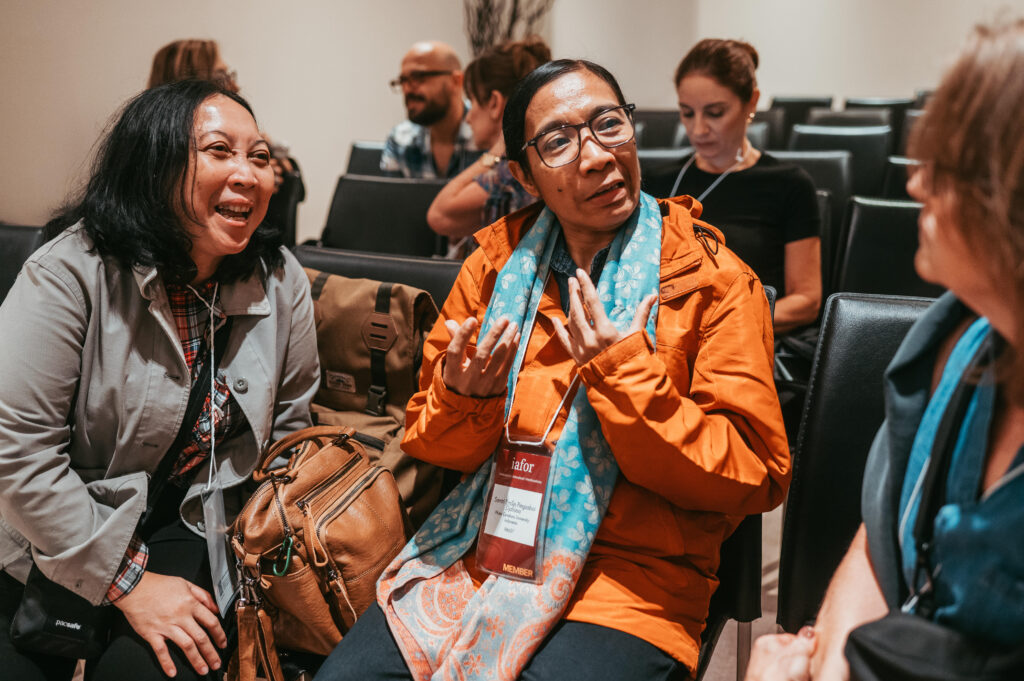
Finally, participants reflected on the deeper mindsets shaping institutions and society more broadly. When asked what the biggest mindset problem is in our institutions and society, many identified attitudes of ‘change is risky’ (33%) and ‘money matters most’ (23%) as key barriers, alongside ‘my rights matter most’ (17%), ‘we must avoid uncomfortable conversations’ (13%), and a fixation on ‘victory at all costs’ (10%).
In response, the discussion called for a fundamental shift in how education, media, and political discourse are structured:
We need to stop thinking of the education system as a corporation, education as a product, and students as clients. (A delegate from the United States)
I agree. When people focus more on collaboration, we can all learn from situations rather than compete. We can also get things done. Whatever needs to be done is better done in harmony than in competition. (A delegate from Romania)
One of the basic things we all need to change is to stop focusing on money and capitalism, and focus on humans. What is it that we need? What is it that our youth needs? What do we see as our future? We have no jobs, and yet we are getting AI to do everything. We are teaching and training young people… but why are we doing all of this? So many people are aware of rising drug addiction. I asked my students, and they said, ‘We have no jobs, so what can we do? We need a way to calm our minds.’ In the process, they become addicted. We really need to focus on humans first. (A delegate from the United Kingdom)
This Forum session evoked emotions of helplessness, much like author and poet Gloria Montero had previously mentioned, speaking to the gravity of the issue of extremism and the failure of our institutions and systems to create safe spaces for dialogue and inquiry. Ultimately, the key takeaway from this discussion session is the need to continue addressing issues of extremism and actively trying to create safe spaces, while rethinking our entire educational, economic, and social systems. Recentering the focus on the human will be key in this endeavour and in the coming decades.
Watch The Forum at BCE/BAMC2025 in the video below.
Banner image: Volodymyr Hryshchenko, Unsplash

You must be logged in to post a comment.